


A Taste of Belgium: Traditional Food, Beer, Chocolate and More
Belgian cuisine is generous, comforting and full of character. It combines the refinement often associated with French cooking with the hearty ingredients and welcoming portions of Northern Europe. From crisp golden fries served in a paper cone to slow-cooked beef stew, fresh North Sea seafood, delicate pralines and beautifully brewed beer, food is one of the most enjoyable ways to discover Belgium.
Many Belgian specialities are closely connected to a particular city or region. Ghent is known for waterzooi, Liège for its dense caramelised waffles and sweet-and-sour meatballs, and the Belgian coast for grey shrimp and fresh fish. Towns across Flanders and Wallonia preserve their own pastries, cheeses and recipes. The result is a cuisine far more varied than the familiar trio of beer, chocolate and waffles might suggest.
This guide introduces the traditional Belgian food and drinks worth looking for during your visit. Some are celebrated restaurant classics; others are simple local favourites found in brasseries, bakeries, markets and neighbourhood frituren. Come hungry: Belgium rewards curiosity.


1. Belgian fries
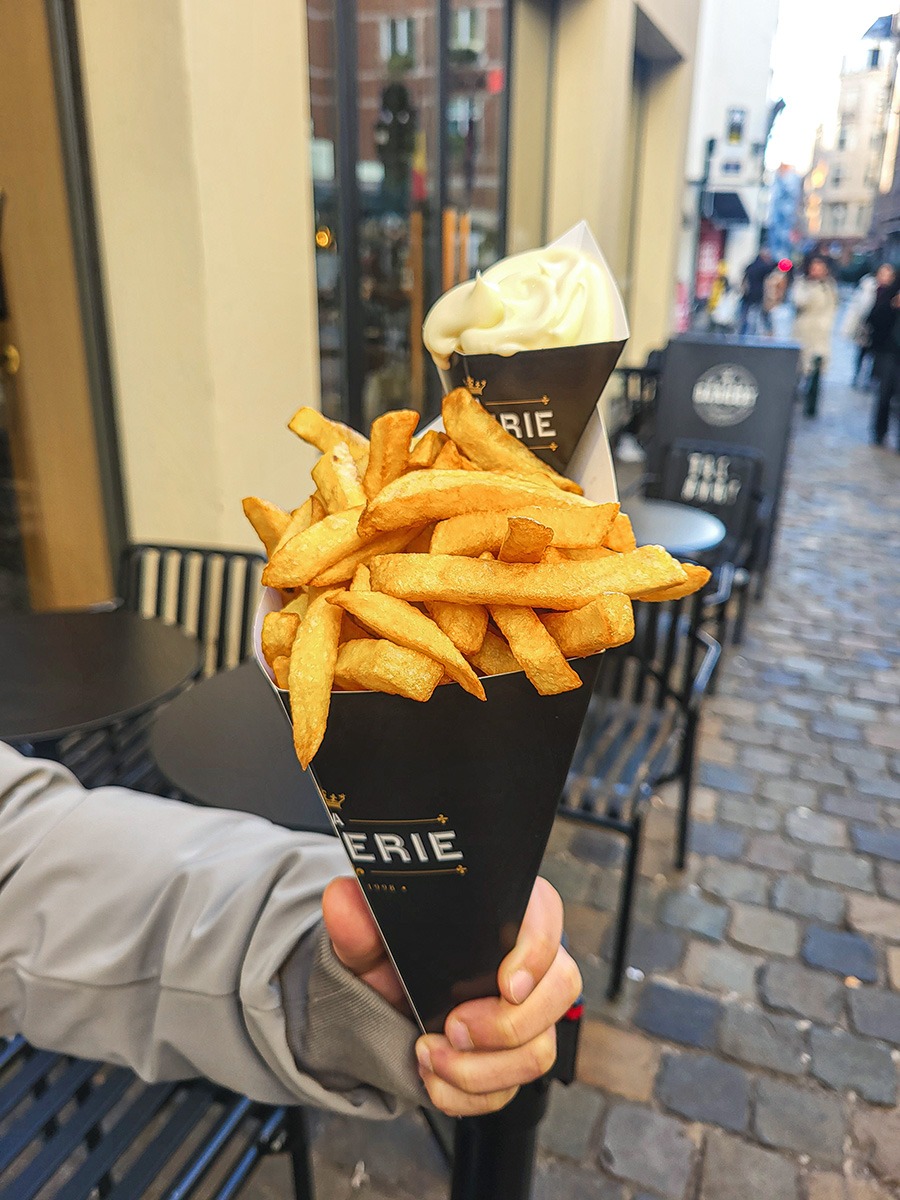
Belgian fries are not treated as a side dish alone; they are part of the country’s everyday culture. Traditionally, thick-cut potatoes are fried twice, producing a crisp golden exterior and a soft, fluffy centre. Order them from a frituur or friterie in a paper cone, then choose from a remarkable selection of sauces. Classic mayonnaise remains the essential Belgian choice.
Did you know?
Did you know? Some traditional Belgian fry shops still use beef fat, while others use vegetable oil, so it is sensible to ask if this matters to you. In Flanders, the frituur is taken seriously enough that local newspapers run an annual competition to find the best one.
2. Moules-frites / Mosselen-friet
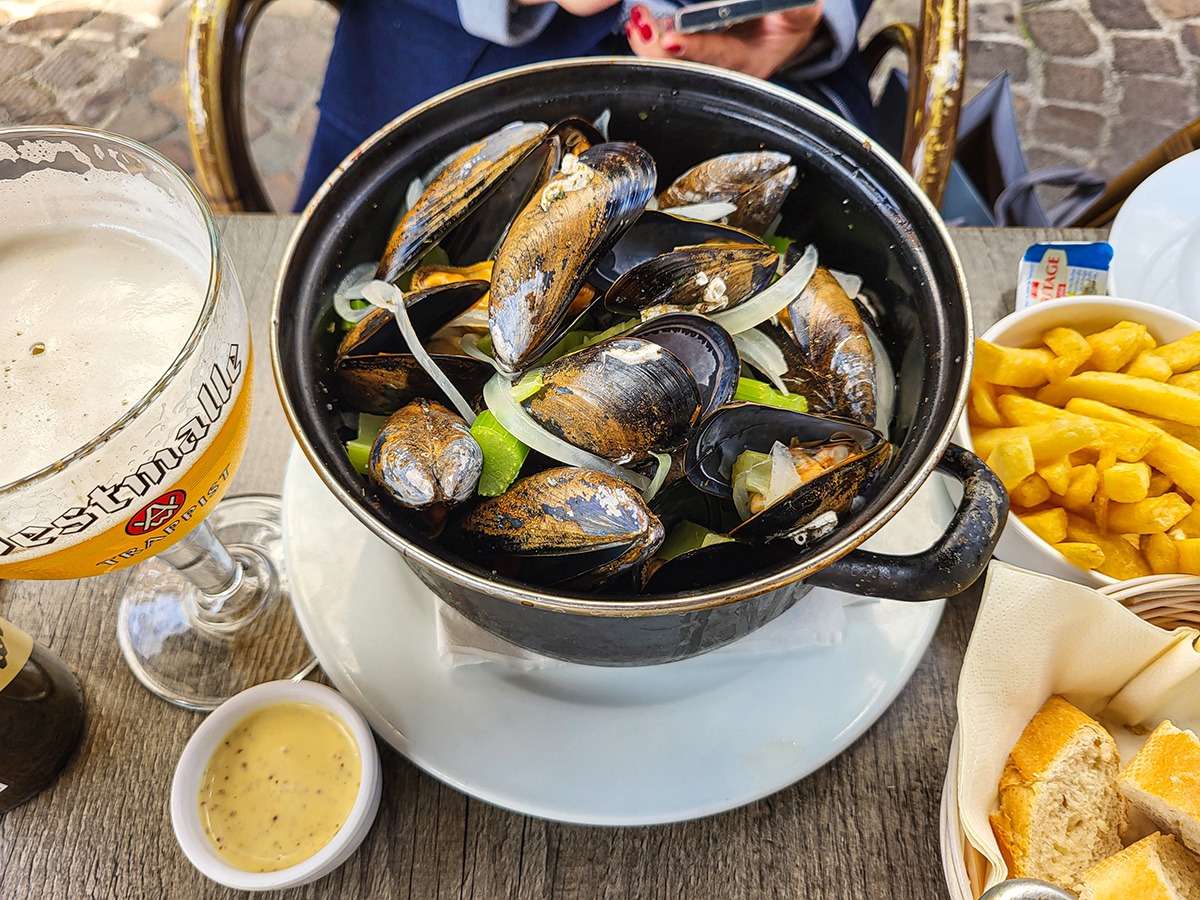
Moules-frites brings together two of Belgium’s best-loved foods: steaming mussels and crisp fries. The mussels usually arrive in a deep pot, cooked with white wine, celery, onion and herbs, although cream, garlic and beer-based versions are also popular. The dish is especially associated with the warmer mussel season, but you will find it on brasserie menus throughout much of the year.
Did you know?
Did you know? Many diners use an empty mussel shell like a pair of tongs to pick the next mussel out of its shell. It is a simple trick that makes the pot easier to enjoy.
3. Stoofvlees met frieten
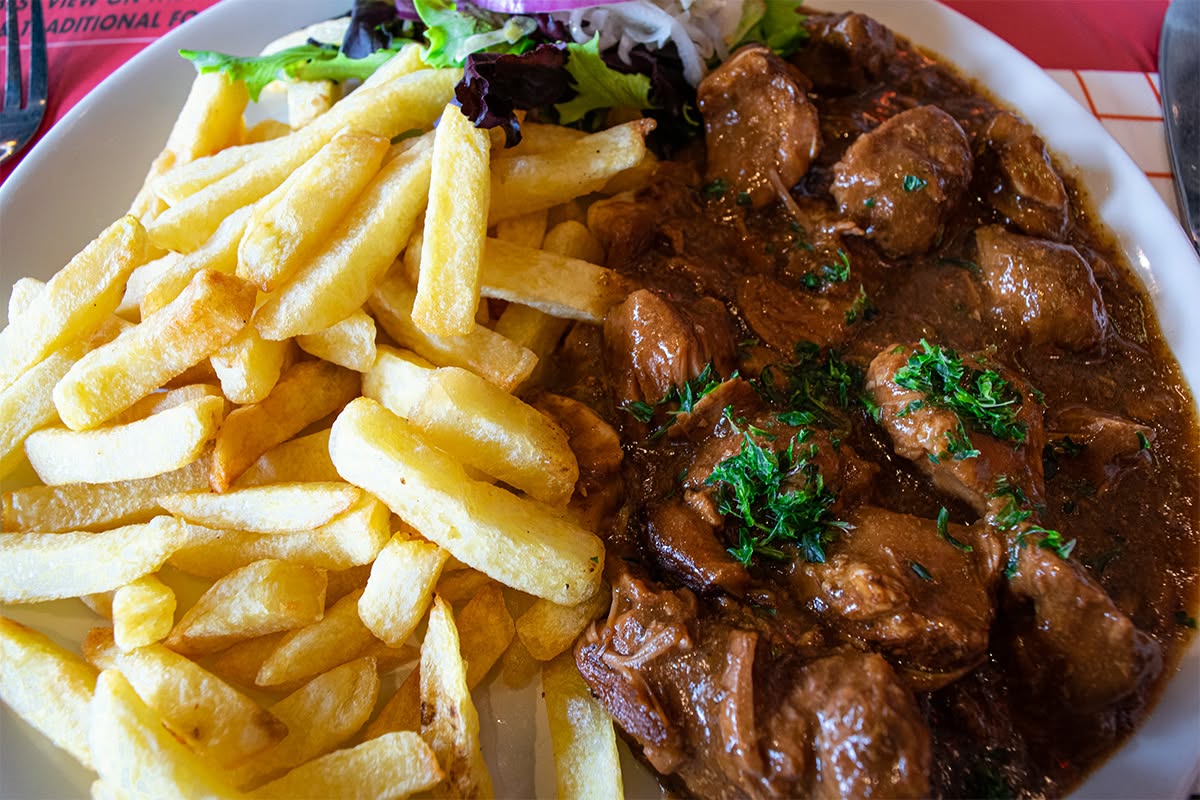
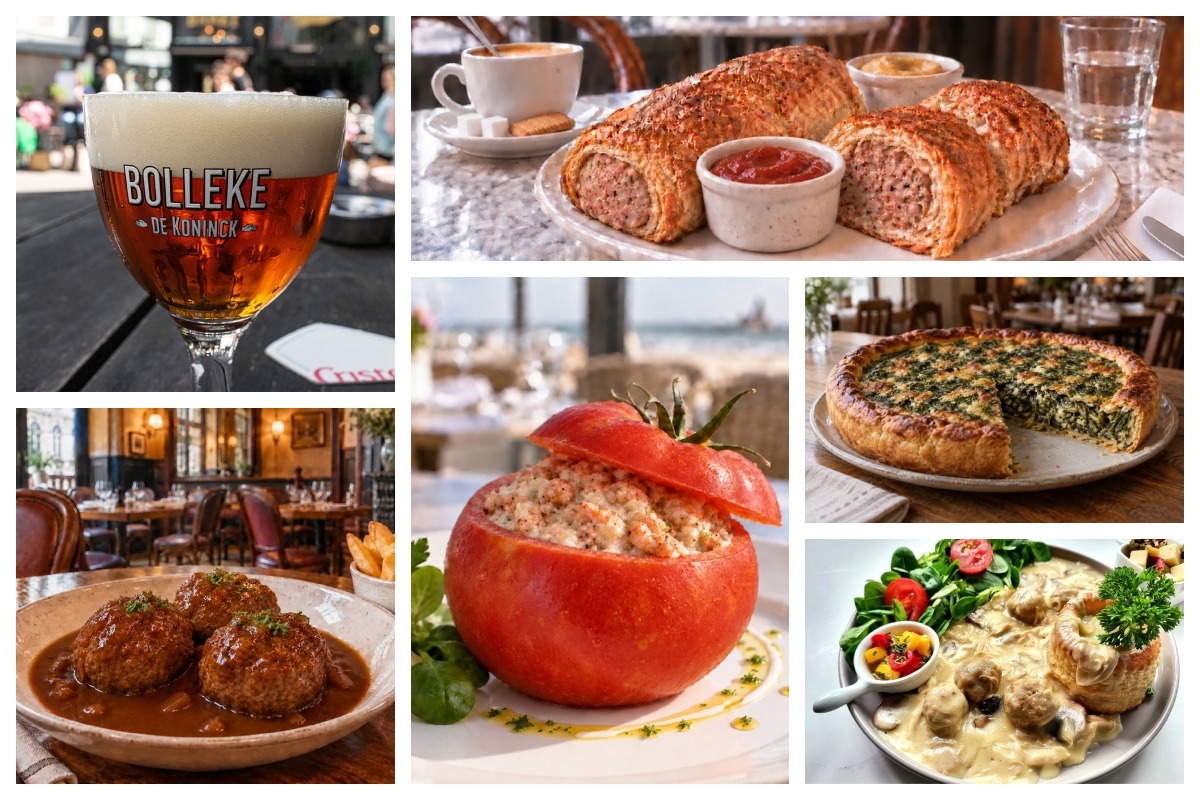
Stoofvlees, also called stoverij or carbonnade flamande, is a deeply flavoured Flemish beef stew slowly cooked with Belgian brown beer. Onion, mustard, herbs and often a slice of bread or a touch of syrup help create its dark, glossy sauce, balancing gentle sweetness with pleasant bitterness. Served with fries to soak up the sauce, it is warming, unpretentious and unmistakably Belgian.
Did you know?
On Belgian menus, stoofvlees may also appear as stoverij or carbonnade flamande, depending on the language and local tradition. The different names reflect Belgium’s multilingual food culture and the dish’s strong roots in Flanders.
4. Gentse waterzooi
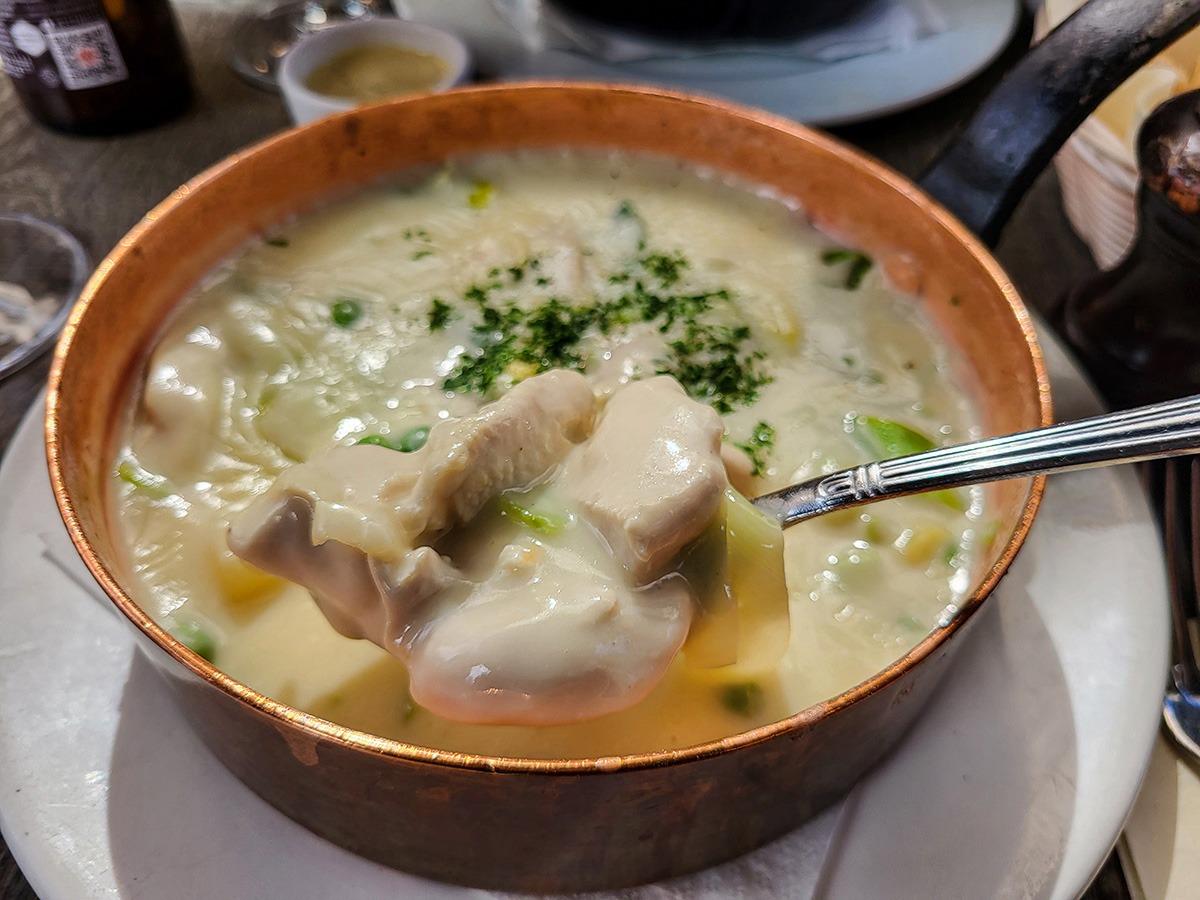
Waterzooi is a creamy yet delicate stew traditionally associated with Ghent. Early versions were prepared with freshwater fish, while chicken waterzooi later became the form most commonly served today, with leeks, carrots, celery, potatoes, cream and egg yolk. Its silky broth and gentle flavours make it lighter than stoofvlees but just as comforting.
Did you know?
The word Gentse means “from Ghent,” so the name itself points to the city behind this dish. You may find it made with fish as well as chicken, depending on the restaurant.
5. Vol-au-vent
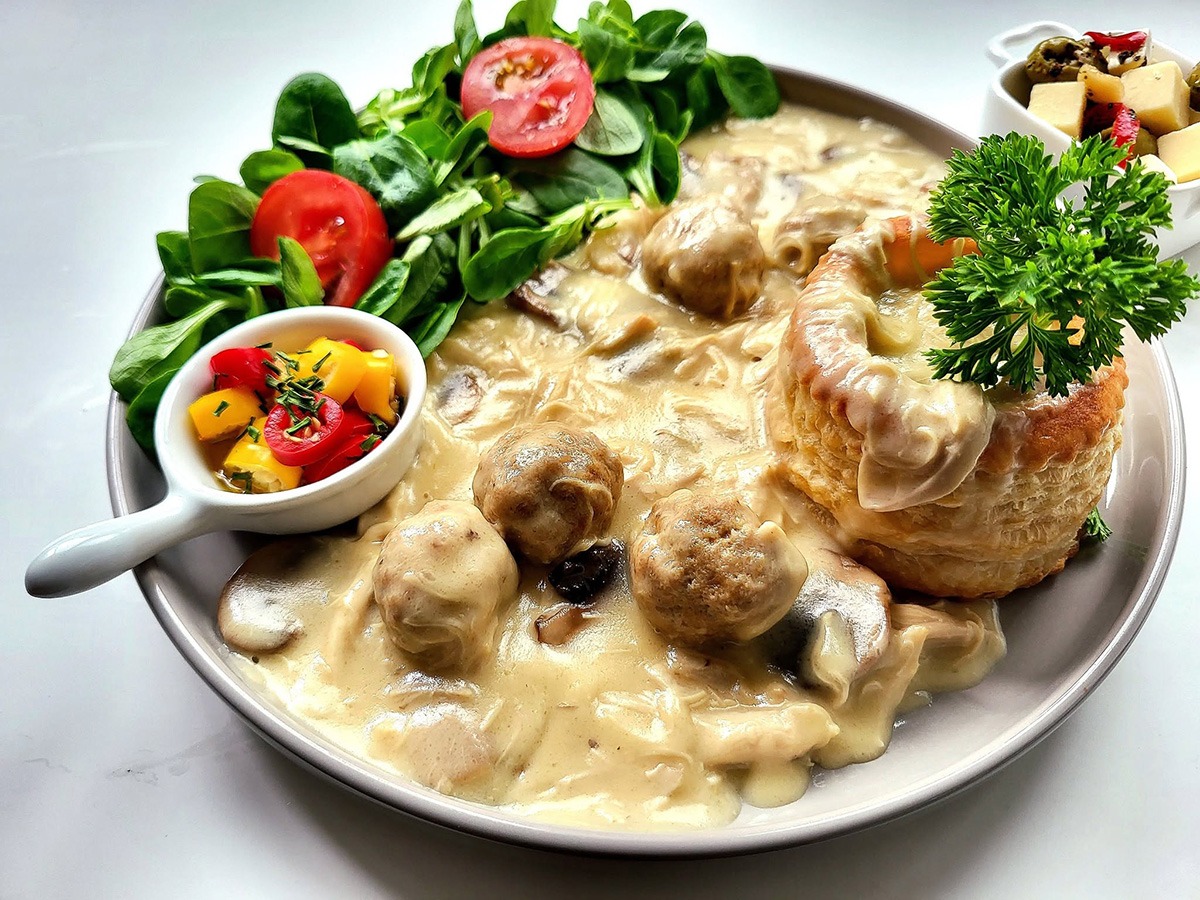
Belgian vol-au-vent is a rich chicken ragout served in or beside a crisp puff-pastry shell. Tender chicken, mushrooms and small meatballs are covered in a smooth creamy sauce, and the dish is often accompanied by fries. Familiar, satisfying and found in brasseries across the country, it is a favourite example of Belgian comfort food.
Did you know?
The French name vol-au-vent means “flight in the wind,” a playful reference to the light, flaky pastry. The name is used for the pastry case as well as for the chicken dish served in it.
6. Tomaat-garnaal
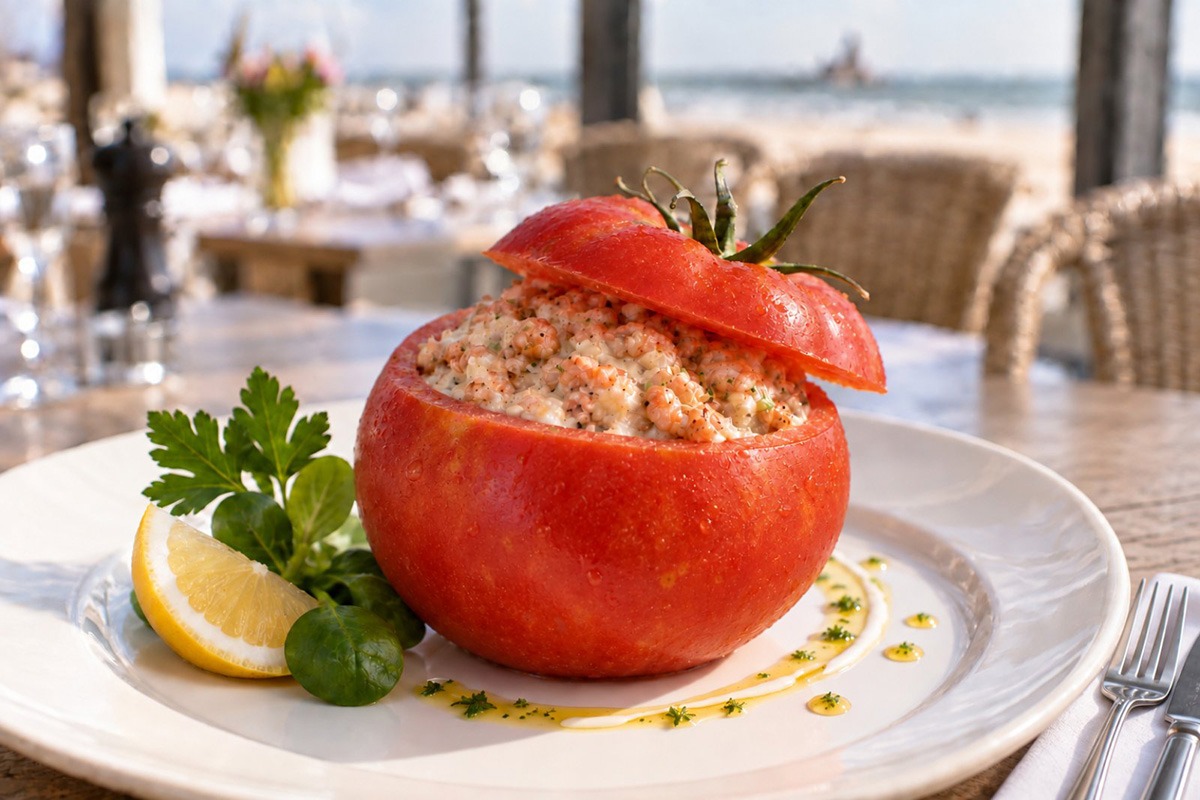
Tomaat-garnaal is a simple Belgian summer classic: a ripe tomato filled generously with North Sea grey shrimp in a light mayonnaise dressing. It may be served as a starter or as a main dish with salad and fries. The recipe is uncomplicated, so its success depends on good tomatoes and the distinctive flavour of the tiny local shrimp.
Did you know?
Grey shrimp are tiny, so preparing enough for a serving takes a surprising amount of careful peeling. Their delicate sweetness is one reason they are so prized along the Belgian coast.
7. Stoemp met worst
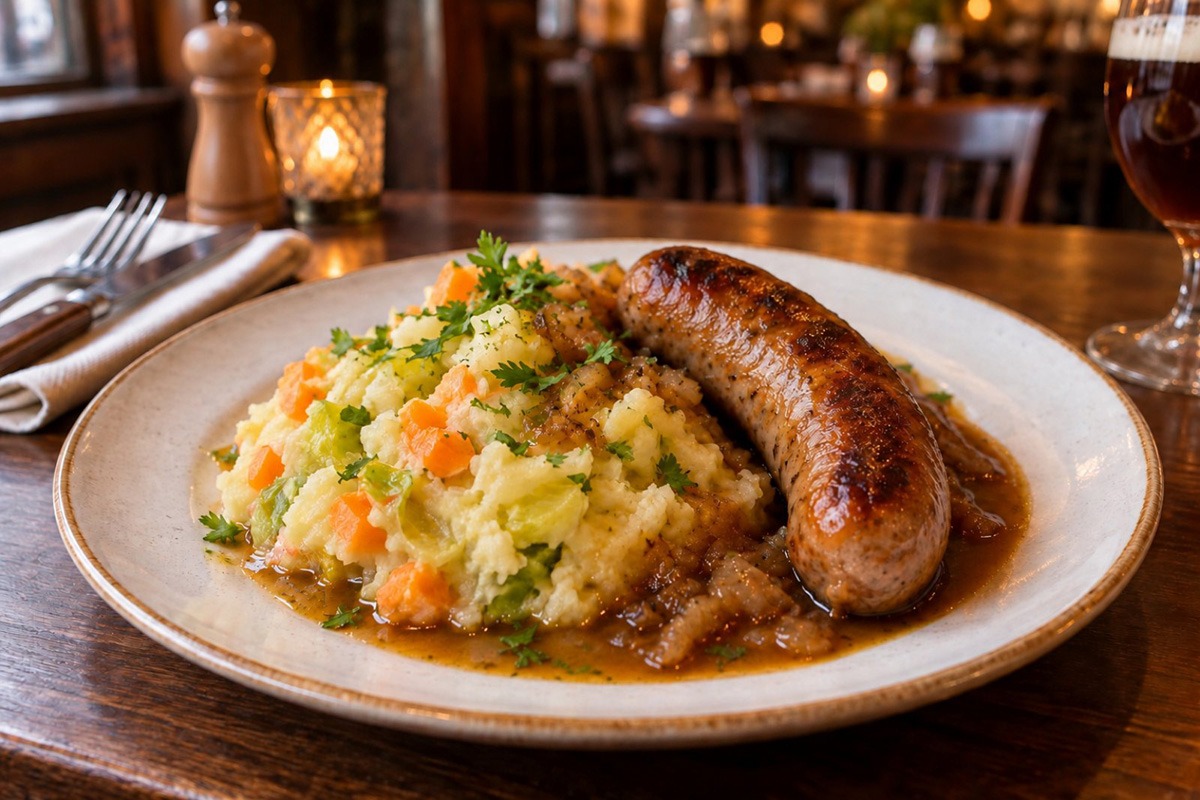
Stoemp is rustic mashed potato mixed with vegetables such as carrots, leeks, cabbage, spinach or onions. It is commonly served with sausage, bacon or another simple meat, along with gravy or mustard. Every household and brasserie can have its own version, which is precisely what makes stoemp feel so homely and authentically Belgian.
Did you know?
Stoemp comes from the Dutch phrase doorgestoempte patatjes, referring to mashed or crushed potatoes. The vegetables mixed in can change with the season or the cook’s own recipe.
8. Witloof met ham en kaas
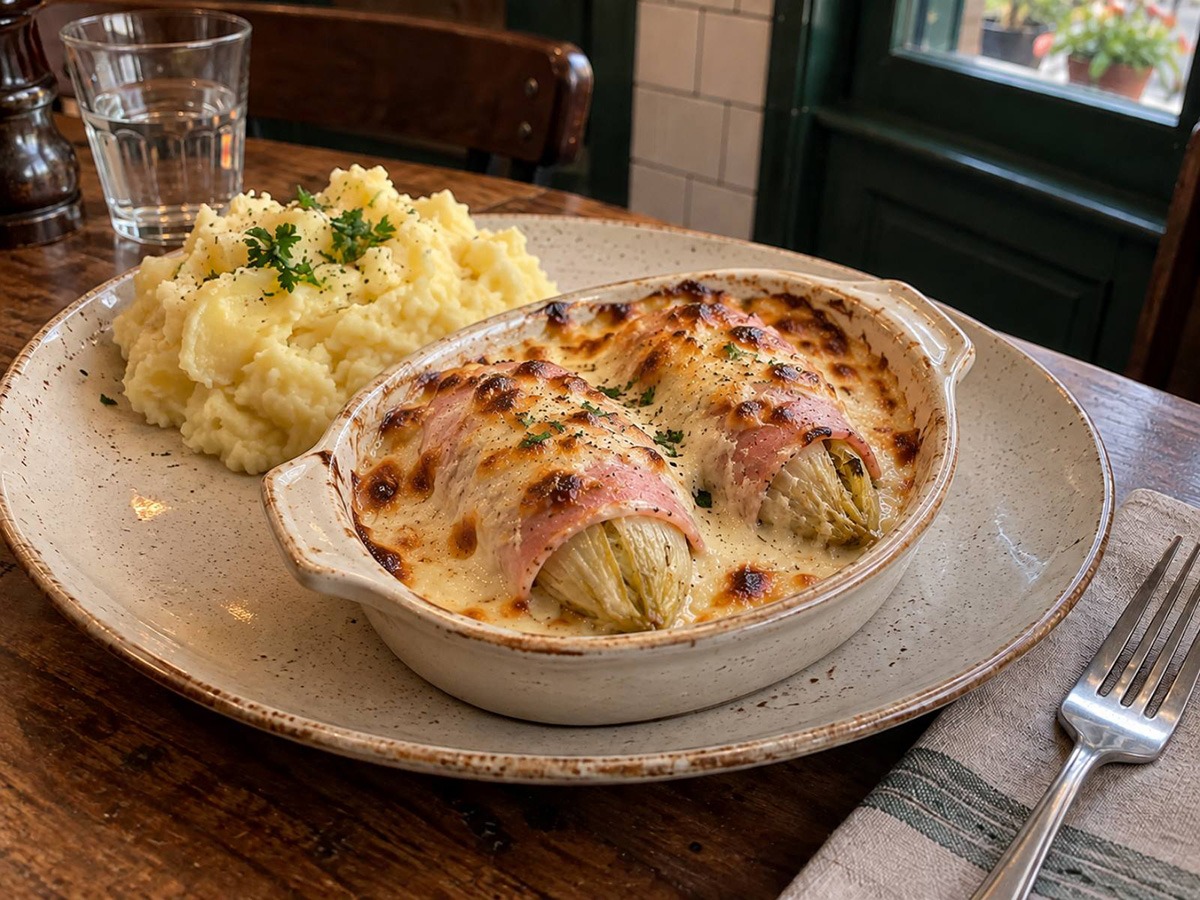
Belgian endive, known as witloof in Dutch and chicon in French, is wrapped in ham, covered with a creamy cheese sauce and baked until bubbling and golden. Its slight bitterness is softened by the ham and rich sauce, creating a balanced and distinctly Belgian flavour. It is a traditional family dish and an excellent introduction to one of Belgium’s favourite vegetables.
Did you know?
Witloof is grown without light to keep its leaves pale and tender. If the leaves turn green, they generally become more bitter.
9. Paling in ’t groen
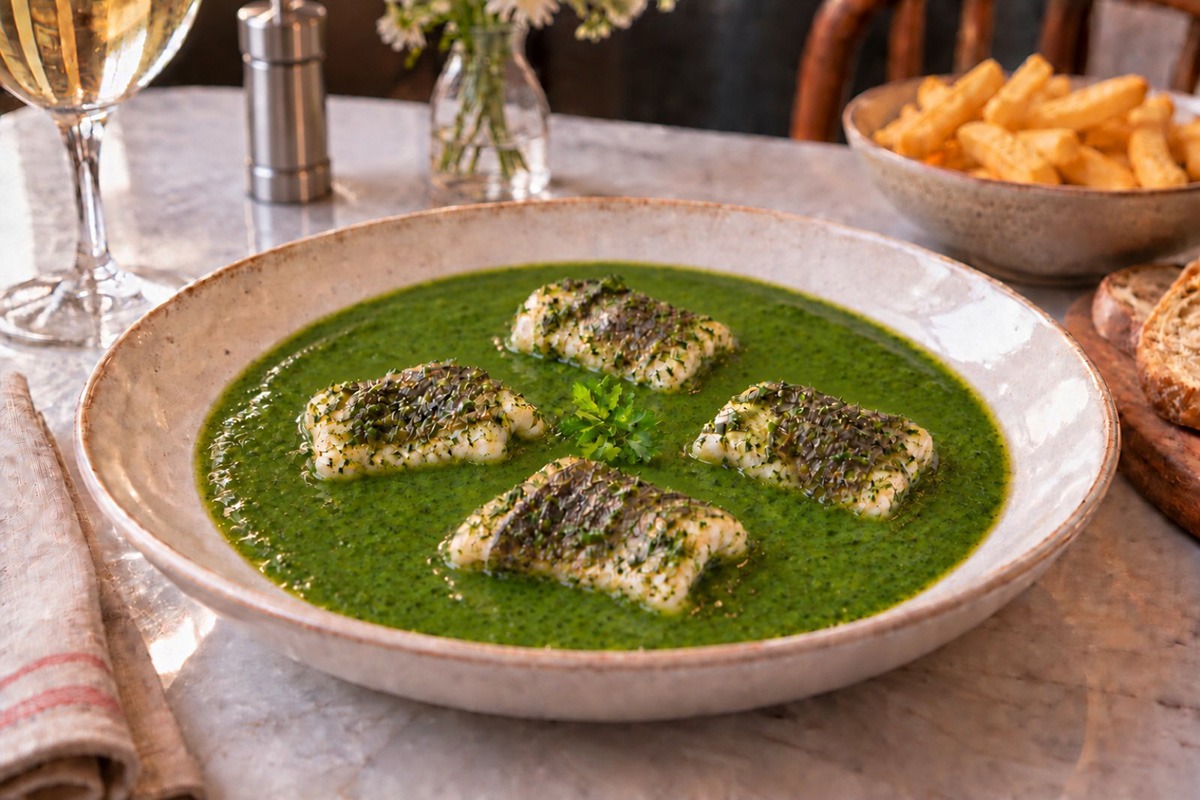
Paling in ’t groen, or eel in green sauce, is a traditional Flemish dish especially associated with the river landscapes around the Scheldt. Pieces of eel are cooked in a vivid sauce made from a mixture of fresh green herbs, whose exact combination varies from one recipe to another. The result is aromatic, slightly sharp and unlike almost anything else on a typical Belgian menu.
Did you know?
The green sauce is a cook’s signature: recipes can combine herbs such as parsley, sorrel, chervil and tarragon in different proportions. That is why two plates of eel in green sauce can look and taste quite different.
10. Boulets à la Liégeoise
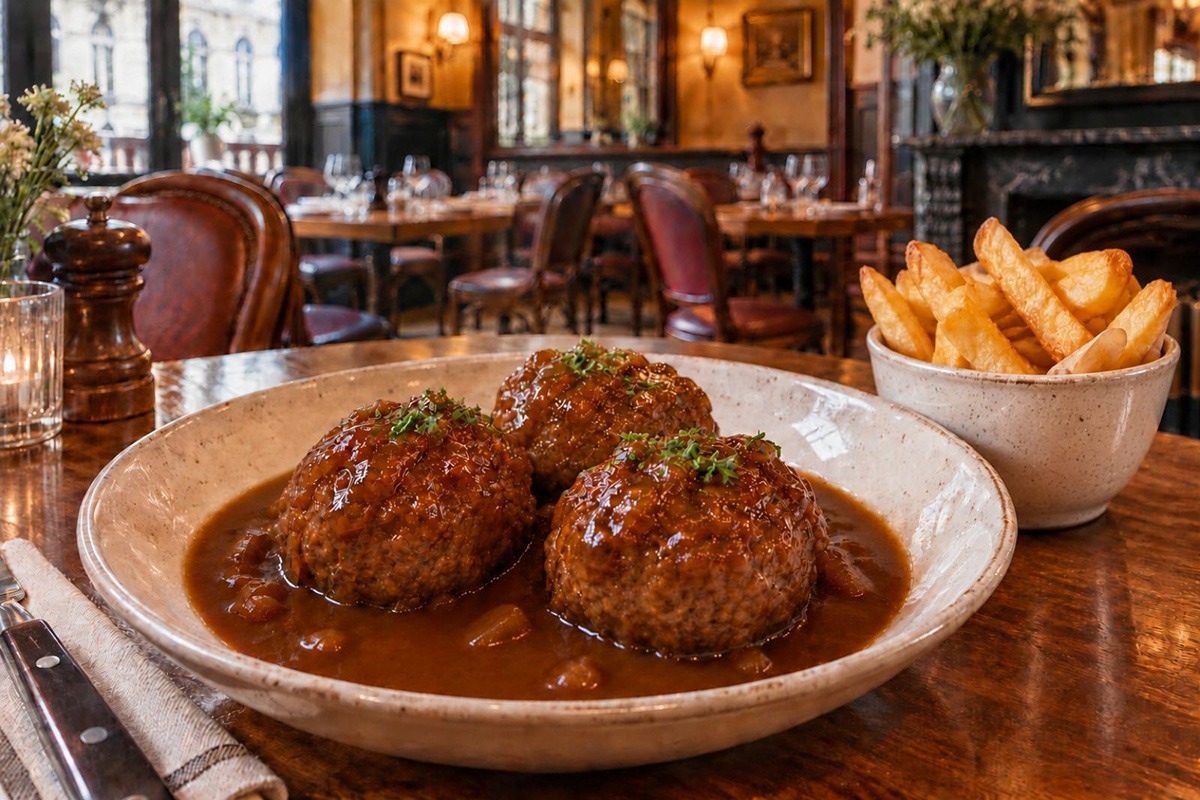
These generous Liège-style meatballs are served in sauce lapin, a glossy sweet-and-sour sauce usually made with onions, vinegar and Liège syrup. Despite its name, the sauce contains no rabbit; the word refers to the traditional style of preparation. Served with fries, the dish is hearty, distinctive and one of Wallonia’s great brasserie specialities.
Did you know?
The sauce is often served with fries as well as with the meatballs, so you can enjoy the same sweet-and-savoury flavour throughout the meal. In Liège, sirop de Liège is a familiar ingredient in local cooking.
11. Salade liégeoise
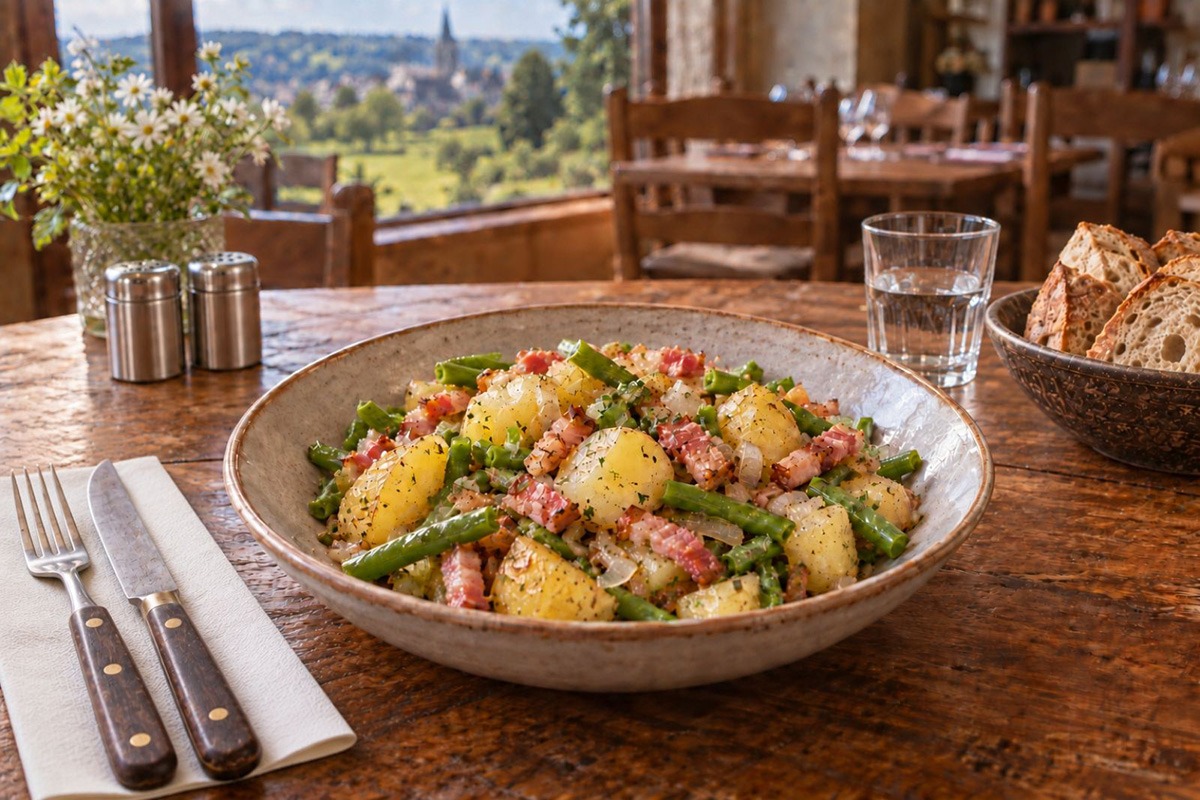
Salade liégeoise is a warm salad from the Liège region made with potatoes, green beans, bacon and onion. A sharp dressing, traditionally brightened with vinegar, cuts through the richness of the bacon and brings the ingredients together. It may look simple, but the contrast of warm vegetables, smoky meat and acidity gives it real character.
Did you know?
This is a substantial salad that can make a full meal, rather than just a small starter. Adding the dressing while the potatoes are still warm helps them take on its flavour.
12. Tarte al djote
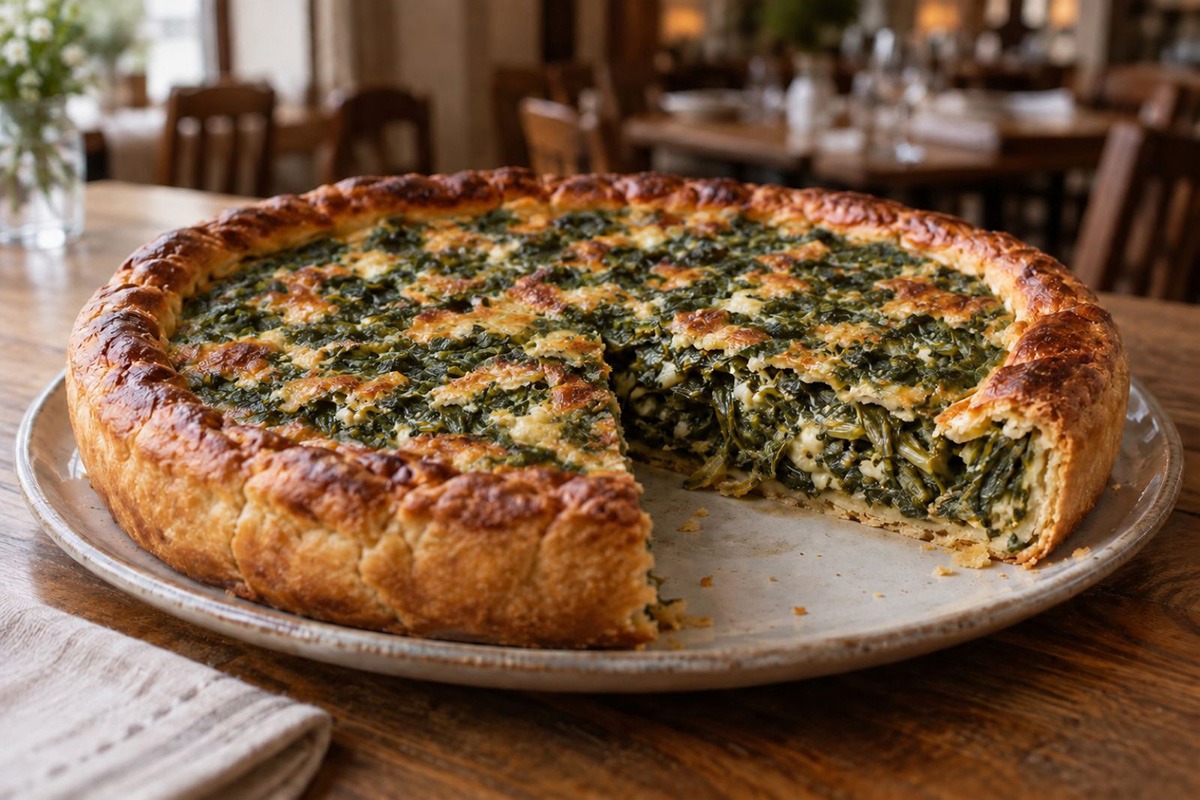
Tarte al djote is the signature savoury tart of Nivelles in Wallonia. Its filling combines local fresh cheese with chard or beet leaves, butter and herbs inside a thin pastry base. Best enjoyed warm, it is creamy, green and deeply connected to the traditions of its home town.
Did you know?
Its green filling makes this Nivelles tart stand out among Belgium’s better-known golden-brown pastries. The balance of local cheese and leafy greens is part of what gives it its distinctive character.
13. Escavèche de Chimay
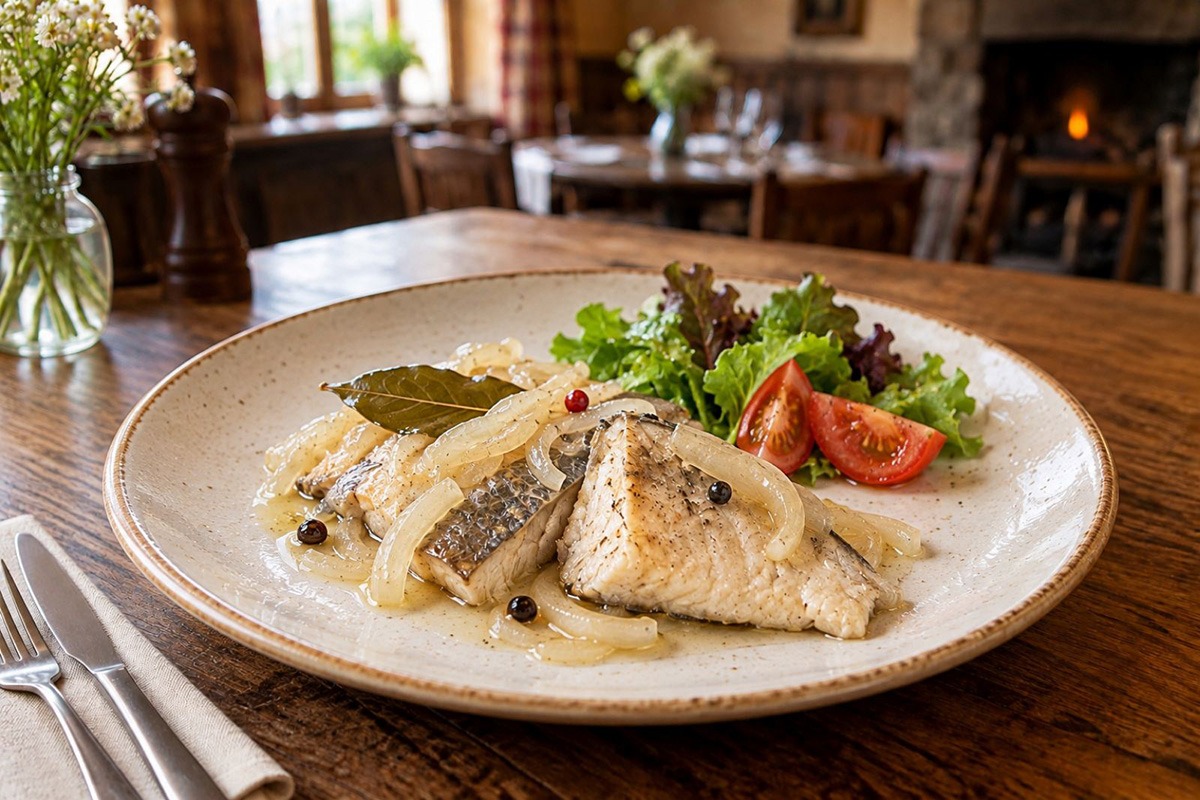
Escavèche is a historic speciality of the Chimay area, made from cooked fish served cold in a pleasantly sharp vinegar-based sauce with onion and spices. It is often served with bread or fries, and its refreshing acidity makes it very different from Belgium’s richer stews. The recipe reflects an older method of preserving fish that became a proud regional tradition.
Did you know?
Escavèche de Chimay is protected as a European Protected Geographical Indication (PGI). The protected name refers to a specific regional preparation of cooked fish served cold in a jellied vinegar sauce with onions.
14. Worstenbrood
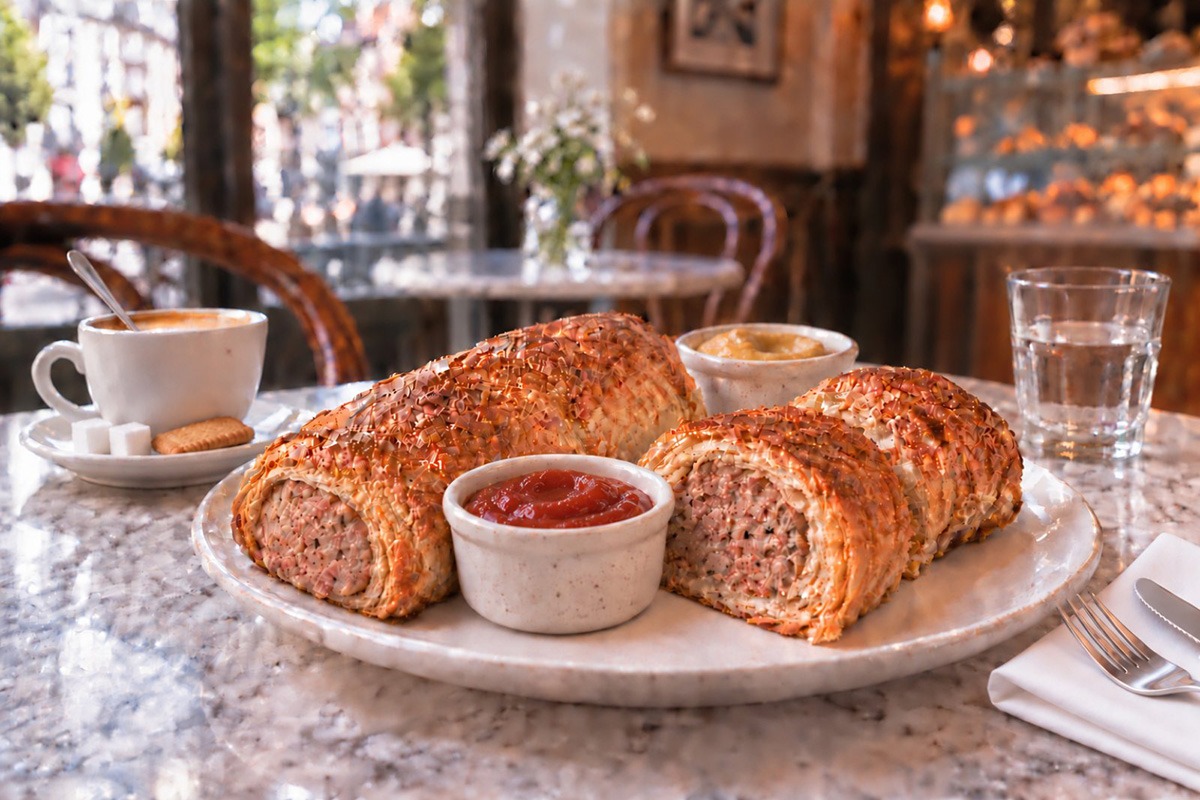
Worstenbrood is sausage meat wrapped in golden puff pastry and baked until crisp. It is particularly popular in Antwerp, where it is strongly associated with Verloren Maandag, or Lost Monday, in January. Bakeries sell it throughout the year, making it an easy savoury snack to enjoy while exploring the city.
Did you know?
In Antwerp, sausage rolls are traditionally eaten on Lost Monday alongside appelbollen, apple-filled pastries. The custom is especially associated with the Monday after Epiphany.
15. Belgian frituur snacks
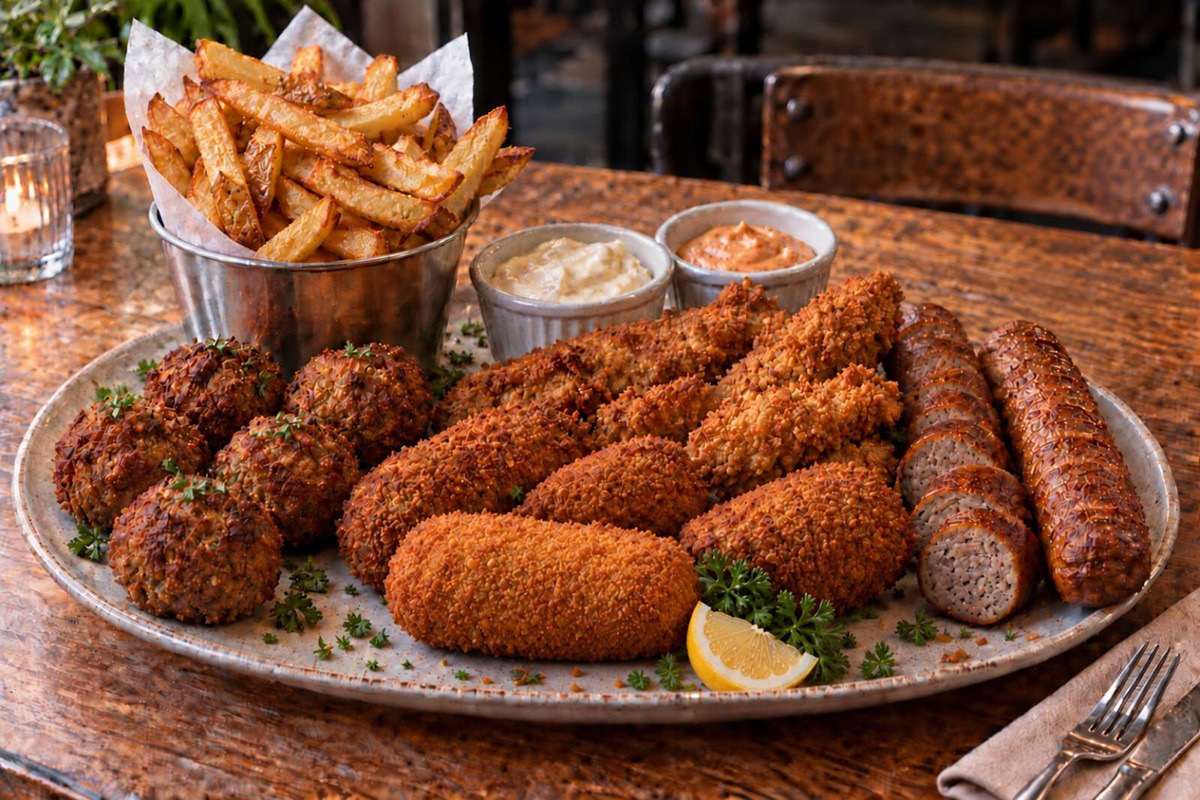
A visit to a frituur is part of the Belgian experience. Alongside fries, the menu may include frikandel or frikandel speciaal, meat and cheese croquettes, bitterballen, bouletten, Bicky burgers, Mexicano, viandel, sitostick, loempia, chicken fingers, nuggets and chicken wings. The selection can seem bewildering at first, so begin with fries, one snack and a Belgian sauce such as mayonnaise, andalouse, samurai or tartare.
Did you know?
These are casual, inexpensive foods rather than refined restaurant dishes, but they reveal an important side of everyday Belgian life. Portions are often generous, and many neighbourhood frituren have loyal customers who defend their favourite shop with almost ceremonial seriousness.
16. Brussels and Liège waffles
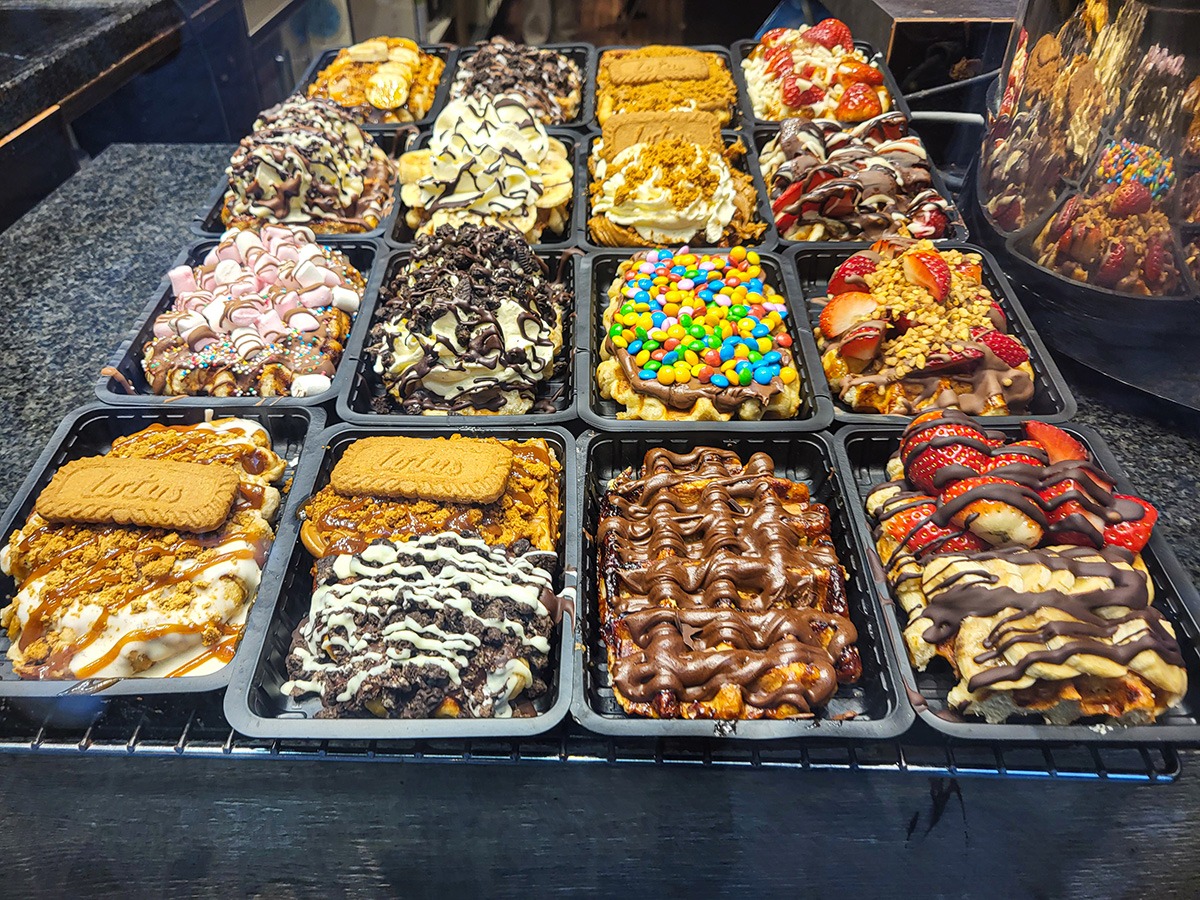
Belgium’s two best-known waffles are quite different. The Brussels waffle is rectangular, light and crisp, with deep pockets often dusted simply with icing sugar; the Liège waffle is smaller, denser and enriched with pearl sugar that caramelises against the hot iron. Elaborate toppings are available, but tasting each style in a simpler form is the best way to appreciate the waffle itself.
Did you know?
The first Brussels waffle is said to have been made in Ghent in the nineteenth century by Brussels pastry chef Florian Dacher. So one of Belgium’s most famous city-named treats has a story that begins in another city.
17. Belgian chocolate and pralines
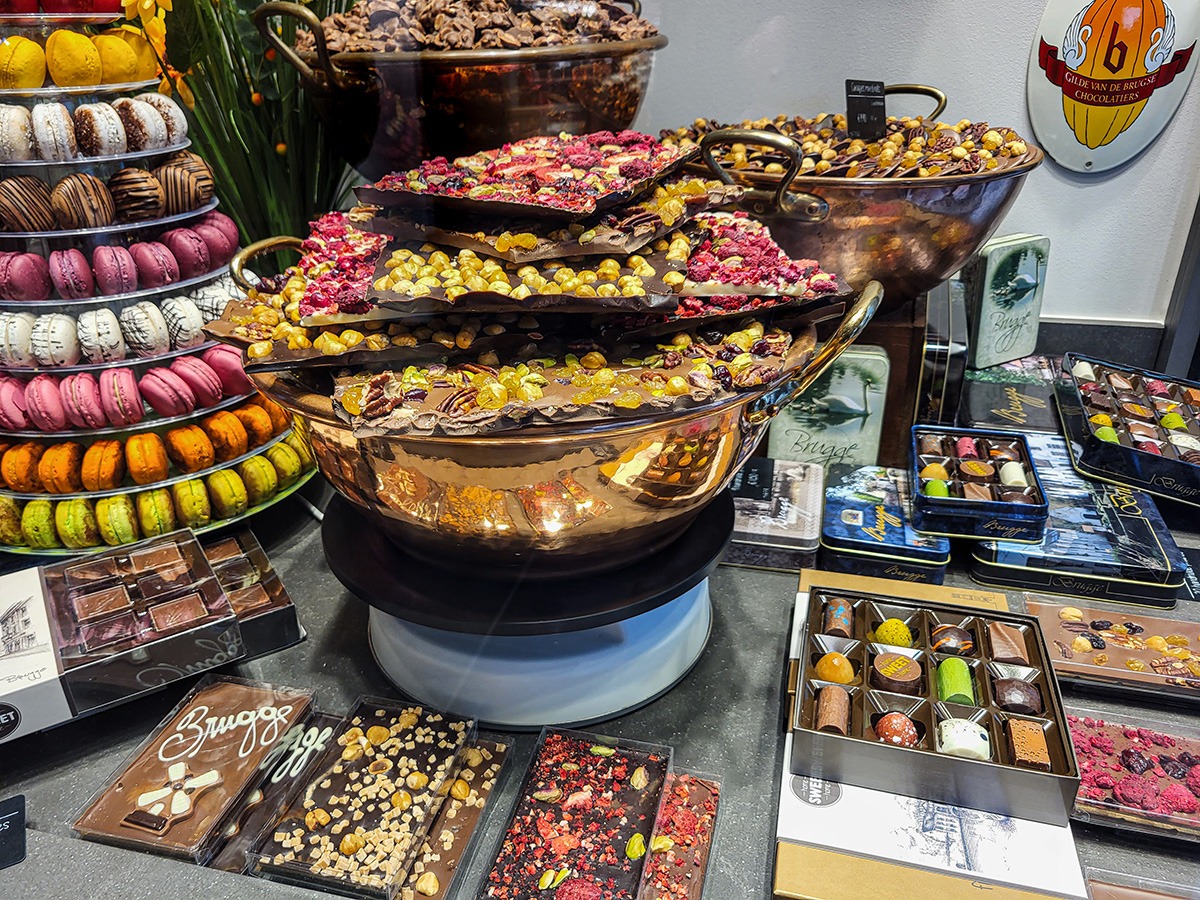
Belgian chocolate is famous not only for its quality but also for the craftsmanship of its chocolatiers. The Belgian praline, a filled chocolate shell, was created by Jean Neuhaus Jr. in Brussels in 1912. Today fillings range from smooth ganache and praline paste to fruit, caramel, coffee and liqueur. Explore independent artisan shops as well as celebrated names such as Neuhaus, Leonidas, Godiva, Mary, Wittamer, Pierre Marcolini, Galler, Corné Port-Royal, Dolfin, Côte d’Or and The Chocolate Line.
Did you know?
The ballotin, the classic box for Belgian pralines, was created in 1915. Louise Agostini designed it to protect the delicate chocolates that had been sold in paper cones.
18. Speculoos
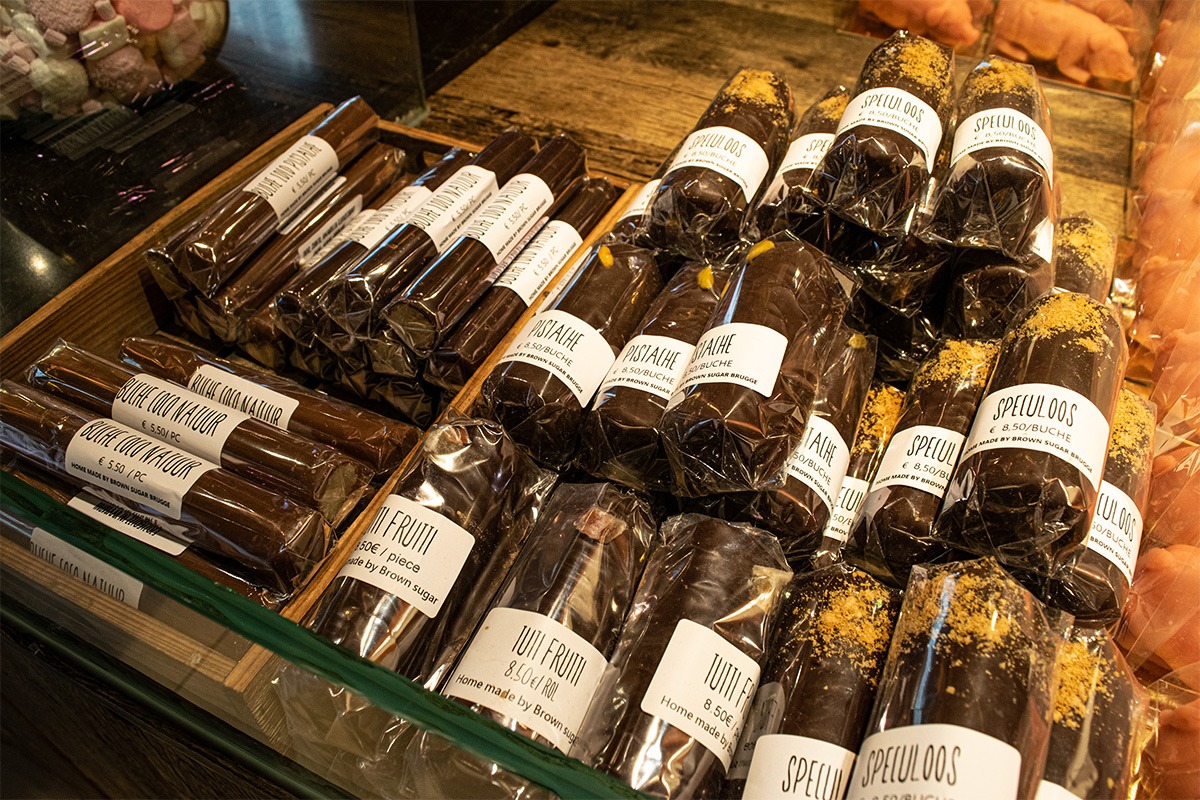
Speculoos are thin, crisp, warmly spiced biscuits traditionally associated with Saint Nicholas celebrations but now enjoyed throughout the year. Cinnamon gives the familiar aroma, while recipes may also include cloves, nutmeg, ginger or cardamom. They are served with coffee, used in desserts and transformed into the popular smooth or crunchy biscuit spread.
Did you know?
Traditional speculoos can be pressed into carved wooden moulds that leave pictures or patterns on the biscuit. In Brussels, sharing speculoos on Saint Nicholas Day is a tradition with roots going back at least to the eighteenth century.
19. Belgium Cheese Varieties
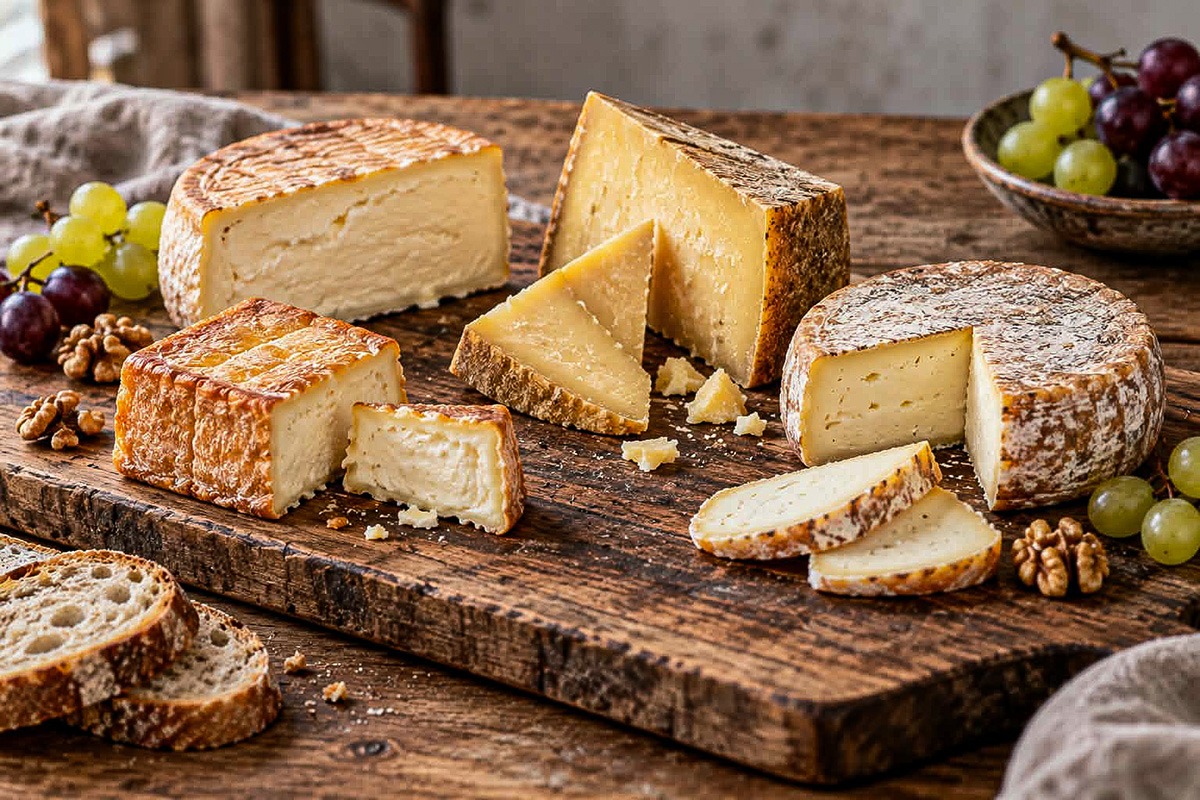
Belgium has a rich cheese-making tradition, with regional specialties, abbey cheeses and well-loved cheeses produced by Belgian makers. Here are some varieties to look out for:
Regional cheese
- Herve – A soft, washed-rind cheese from the Pays de Herve, known for its distinctive aroma and creamy texture. It has protected PDO status.
- Passendale – A mild, creamy cheese with a soft, airy texture and small holes.
- Fromage de Bruxelles – A traditional Brussels cheese with a salty, aromatic flavour.
- Maquée – A fresh, mild cheese from Wallonia, often served on bread with herbs or a sweet topping.
- Boulette de Romedenne – A traditional cheese made from Maquée, seasoned with salt and tarragon, then matured to develop a full, herbaceous flavour.
- Boû d’Fagne – A soft, washed-rind cheese with a supple texture and a more pronounced taste.
Abbey and Trappist Cheeses
- Chimay – A Trappist cheese made with milk from the Chimay region. Some varieties are washed in Chimay beer.
- Orval – A Trappist cheese made with cow’s milk from the Gaume region.
- Westmalle – A semi-hard, matured Trappist cheese made with milk from the abbey’s own cows.
- Maredsous – An abbey cheese known for its orange rind and creamy flavour, developed through traditional maturation in the abbey’s caves.
- Val-Dieu – A Belgian abbey cheese range that includes mild, creamy varieties such as Bouquet des Moines, as well as the gently blue-flavoured Bleu des Moines.
- Père Joseph – A Belgian abbey-style cheese with a creamy texture and a more pronounced flavour.
- Karmelietenkaas – A semi-hard Belgian abbey cheese with a mild, creamy taste.
Other Belgian Cheeses
- Brugge Jong Belegen – A young, creamy cow’s-milk cheese with a mild flavour.
- Flandrien Oud – A mature Belgian cheese with a fuller flavour, aged for around 12 months.
- Maredsous Light – A lighter, mild cheese available in sliced form.
20. Belgian Beer Culture
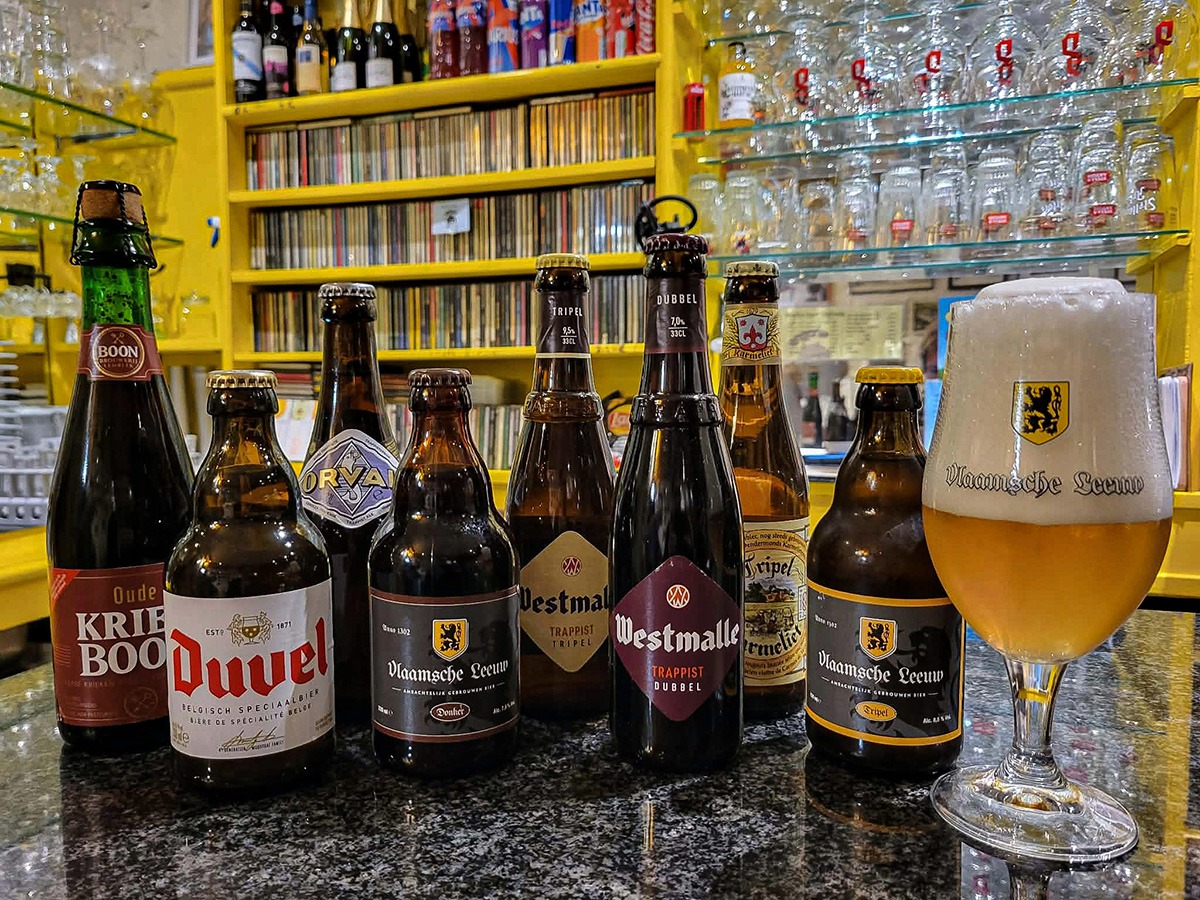
Belgium has more than 1,000 beer varieties, and the number depends on how individual labels, seasonal brews and special editions are counted. What matters most is the astonishing diversity: pale and refreshing beers, dark monastic ales, spontaneously fermented lambics, fruit beers, saisons, strong golden ales and complex bottle-conditioned brews all belong to the same living culture. Belgian beer culture was added to UNESCO’s Representative List of the Intangible Cultural Heritage of Humanity in 2016.
Glassware is part of the ritual. Many beers have a dedicated glass designed to support their aroma, foam and presentation, while serving temperature and pouring technique also shape the experience. Check the alcohol percentage: many smooth and elegant Belgian beers are considerably stronger than standard lager.
- Trappist beer: Brewed within the framework of a Trappist abbey under strict conditions; famous Belgian examples include Westmalle, Orval, Chimay, Rochefort and Westvleteren.
- Abbey beer: Inspired by monastic brewing traditions and often rich in malt character; Leffe, Grimbergen and Affligem are widely recognised examples.
- Belgian blond and strong golden ale: Golden beers with malt, yeast and fruit character. Duvel is a classic reference for strong golden ale.
- Tripel and dubbel: Tripel is a strong pale ale with lively carbonation, spicy yeast aromas and a dry finish; Tripel Karmeliet and Westmalle Tripel are celebrated examples. Dubbel is darker and malt-led, with notes of caramel, dried fruit and gentle spice.
- Quadrupel and Belgian dark strong ale: Full-bodied and powerful, often showing dark fruit, caramel and warming spice; Rochefort 10 is a renowned example.
- Witbier: A cloudy wheat beer traditionally brewed with coriander and orange peel; Hoegaarden helped make the style famous worldwide.
- Saison: Originally associated with farm brewing in Wallonia, usually dry, refreshing and peppery, with a rustic yeast character.
- Lambic, gueuze and kriek: Lambic ferments through naturally occurring microorganisms around the Senne valley; blending young and mature lambics creates complex, sparkling gueuze. Kriek is traditionally made with cherries. Cantillon, Boon and Lindemans are well-known names.
- Belgian lager: Clean and refreshing, represented internationally by Stella Artois, though Belgium’s beer identity reaches far beyond lager.
Other famous names travellers frequently encounter include Delirium Tremens, La Chouffe, Palm, Kwak and Gouden Carolus, as well as many local beers from independent breweries. Rather than chasing only the strongest or rarest bottle, ask for a recommendation that suits your taste and try a style you have not encountered before.
Discover Belgium Through Its Food
Belgium’s food culture is an enjoyable part of the country’s character, from traditional dishes to much-loved local specialities. If you’d like to explore it during your visit, I can design a tailor-made culinary tour based on the area where you’re staying. The route and experience can be planned to suit your location, so you can discover Belgian flavours while getting to know the place you’re visiting.
To discuss a tour, contact me by phone or WhatsApp on +32 487 670 312, or email info@toursinbelgium.com. I’ll be happy to help you plan a memorable culinary experience in Belgium.